-
-
- Financial Aid
- Financial Aid
- Scholarships
- Loans
- Grants
- Federal Work Study
- Additional Resources
-


With a near-100% graduate placement rate, Taylor’s Computer Science & Artificial Intelligence Department is one of the premier Computer Science programs in Indiana. Highly acclaimed for our academic rigor and flourishing community, we equip students with the skills and experience they need to reach their full potential.
Our mission is to honor God in all we do, to pursue excellence, and to help students become outstanding computer scientists, exceptional systems analysts, committed Christians, and highly motivated to serve. We think you learn best when you’re driven by this shared mission–and your own initiative. That’s why we create a learning environment where you can learn what you’re interested in, all within a supportive learning community, state-of-the-art facilities, invaluable real-world experience, and major research and project opportunities.
You'll thrive in Taylor's Christ-centered community, where our dedicated faculty members take a personal interest in your personal growth and education. As a Christian liberal arts school, we integrate faith with learning in which students are taught wonder for God and His creation.
Gain an in-depth understanding of the technology that drives our world, and the problem-solving skills to create that technology.
You'll graduate with an outstanding portfolio in hand to gain an edge in getting not just any job, but the perfect one.
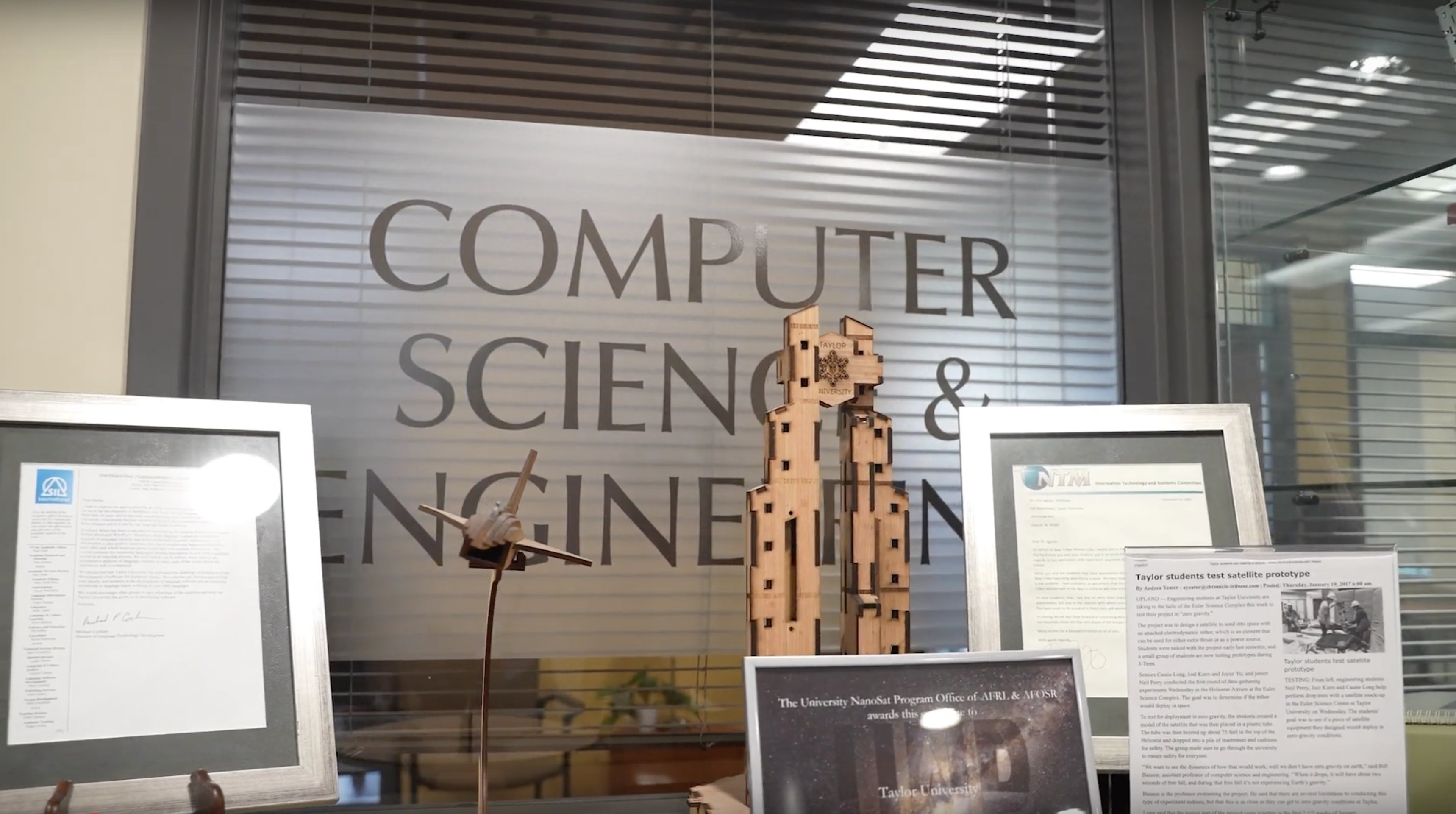
With an almost 100% success rate, Taylor students graduate with connections to the job market, expertise in many areas, and skills that are ready to adapt to a rapidly-changing tech landscape.
Cybersecurity Research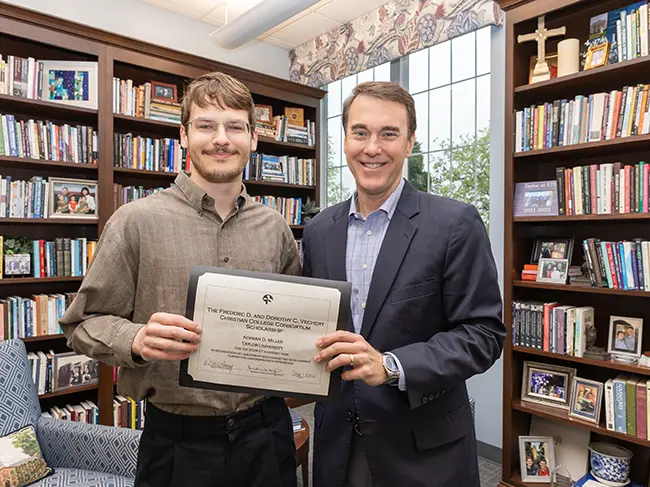
Korban Miller '27 Awarded Scholarship
Computer Science junior Korban Miller ’27 was awarded the Frederic D. and Dorothy C. Vechery Christian College Consortium Scholarship for the 2026-2027 academic year. The annual endowed scholarship fund seeks to bless 12 students, particularly upperclassmen, at Christian liberal arts institutions, who are involved in student leadership. From website coding for University Marketing to playing piano in a Chapel band, in his church’s worship team, and Taylor’s jazz band, Miller has been highly engaged during his time at Taylor.
The first in his family to graduate from a Christian university, Miller looks forward to where the Lord will lead him. Inspired by his 3D animation rendering class, he is interested in pursuing animation software; minoring in Music has also piqued his interest in audio production engineering. Miller is “beyond grateful to go into my senior year with this unexpected blessing.”
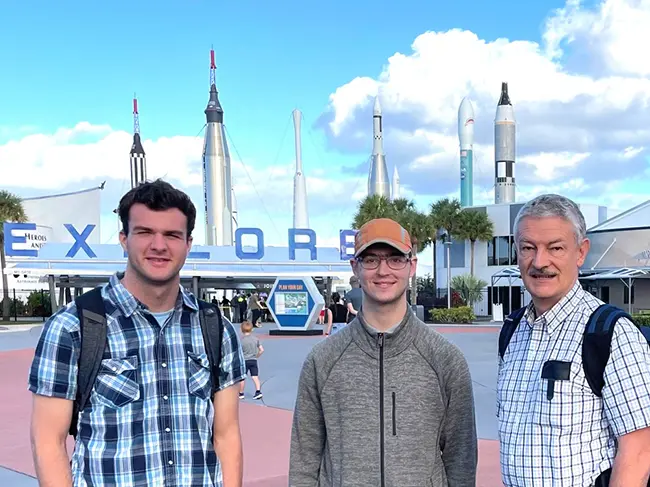
Student-Teacher Team Sends LEGO® Satellites to Space
Taylor University professor Dr. Stefan Brandle and Computer Science and Computer Engineering students Joshua Brown and Evan Smith co-authored a presentation given at the 2025 SmallSat Education Conference at the Kennedy Space Center. They presented a small satellite built using LEGO electronics that could successfully fly in space and send data back to earth.
The goal of this project is to show how students could become interested in STEM and aerospace through building and launching LEGO-based satellites that capture their imagination. This project is supported by the 1846 Giving Circle.
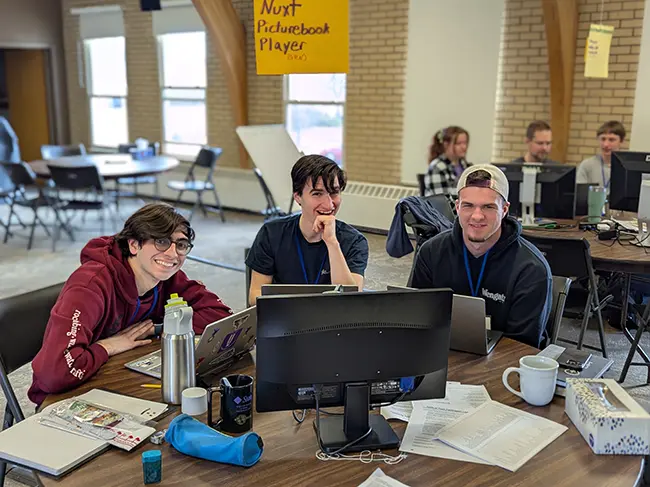
Spring Break Code-a-thon for Missions
Taylor’s Roth Center for Missions Computing traveled with five Computer Science & Engineering students to Colorado Springs to participate in the annual “Code-a-thon for Missions” hosted by LightSys.
The students formed two teams that spent the week writing code and developing web applications for missions organizations around the world. This was the last of four spring break code-a-thons that LightSys hosted in March for various universities, and Taylor was joined by two teams from the Pacific Northwest.
After a week of hard work, the students presented their projects and handed over the code to the project owner. Students shared that the opportunity was challenging, but enriching, and said they were eager to participate again next year.
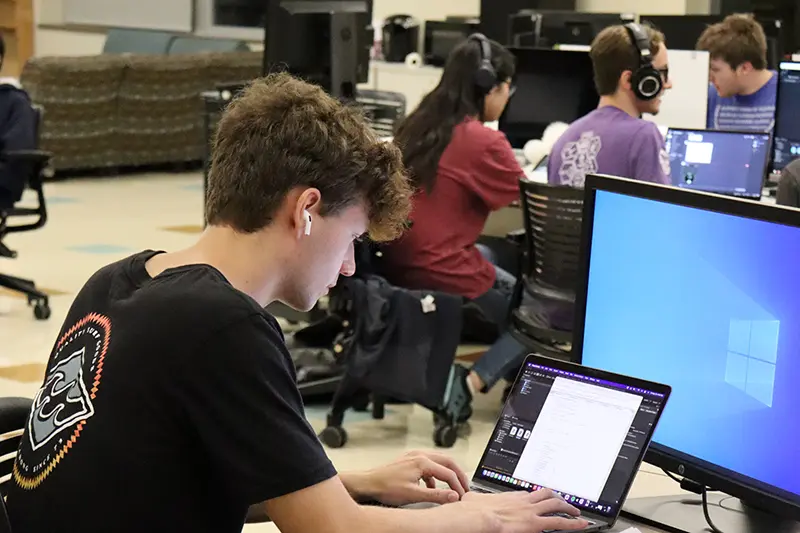
GameJam
GameJam is a game jam series hosted by the CSE Department and Dr. Jon Denning and run by students at Taylor University. It's is a short, fun, and intense party during which students get together to develop a video game from scratch. Regardless of major or knowledge of programming, all TU students are invited to participate each semester!
Tech industry experience starts your first year at Taylor. You'll have the opportunity to work on real-world computer science projects such developing software for the space, defense, and missions community, take your skills abroad with the Center for Missions Computing, and much more.
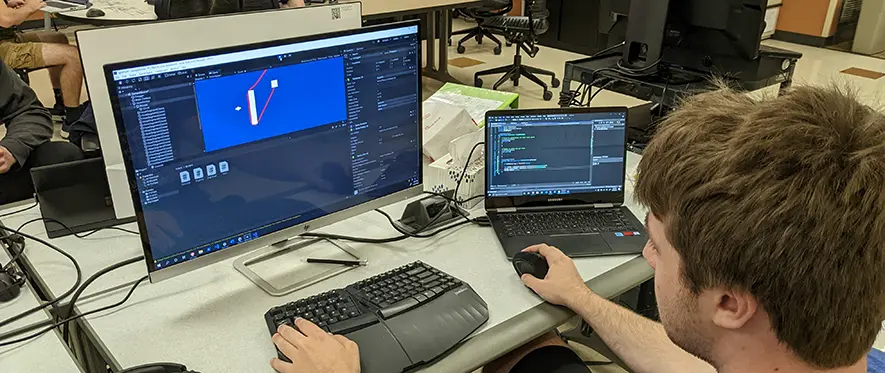
On-Campus Events
Join the CS community for fun and challenging events like Game Jam, a themed competition where students have 24 hours to plan, design graphics, and build code for video games. It's fun, it's intense, you make really cool code—and it gives practical experiences in team dynamics and collaborative problem-solving that will serve you well long after you graduate.
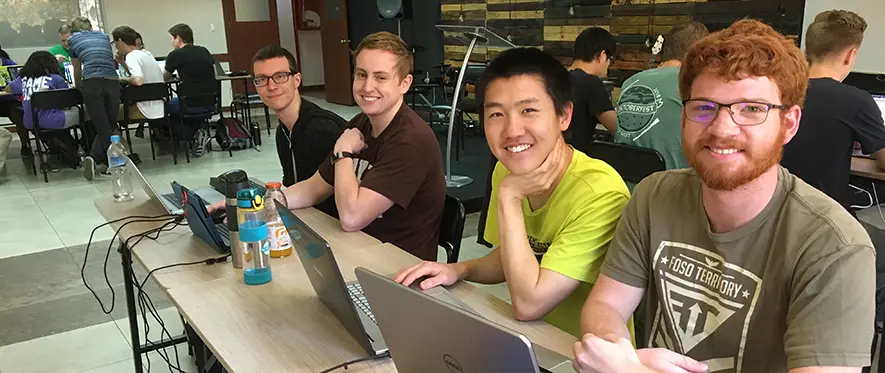
Internships
Internships boost careers. All CS students complete at least one required internship/practicum, and many seek out multiple internships during their time at Taylor.
You'll apply what you’ve learned to the computer science industry, software start-ups, corporations, and missionary organizations. Interns from Taylor receive great reviews from employers who cite their technical knowledge, interpersonal skills, and sense of responsibility. Many internships turn into full-time employment opportunities upon graduation.
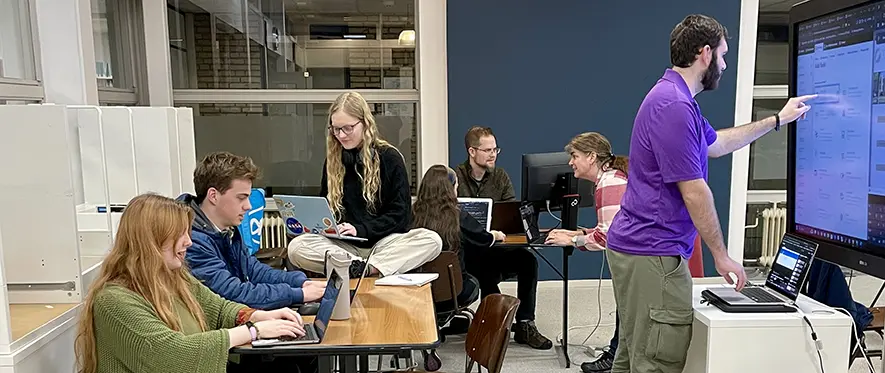
Missions & Community Service
Through the Taylor Center for Missions Computing, students can use and develop their computing skills while serving the Kingdom on J-term trips.
Students partner with Business as Mission organizations and fulfill technology needs.
CSE contributes computers, network equipment, and the expertise of faculty and students to schools like The King’s Academy (K-12 Christian academy) and NearSpace Education, a local science and space non-profit.
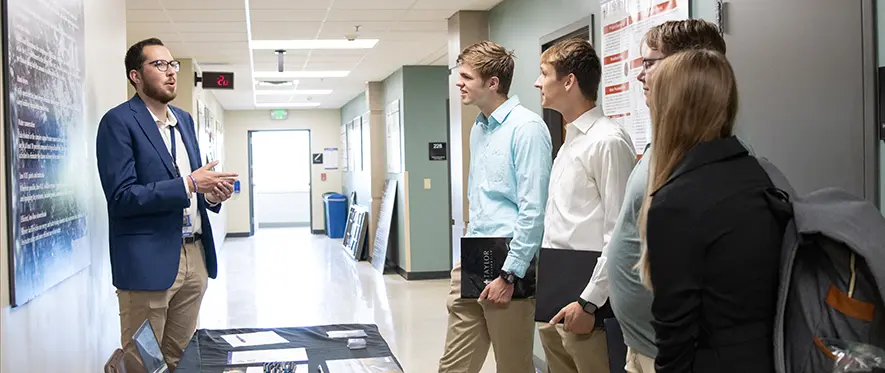
Tech Fair
The Tech Fair sees companies come from all over the country to promote their causes and recruit students for potential careers. This event is hosted in September of each year, giving you the best chance of landing an internship or job for the following summer.
The Tech Fair is open to any students interested in the tech industry, including Computer Science, Physics, Engineering, and Data Science majors.
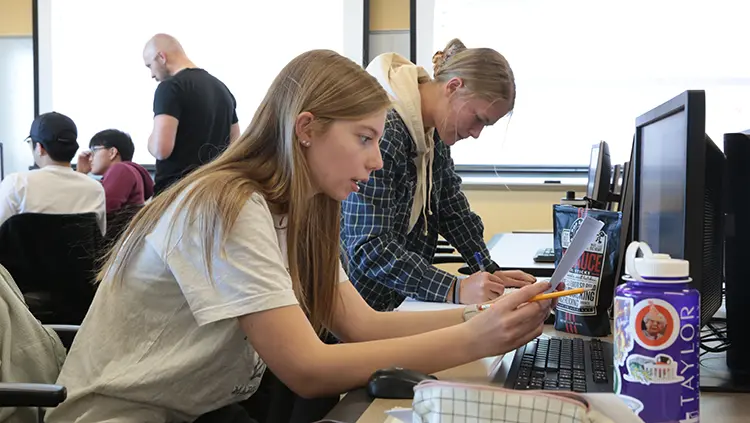
The Computer Science Scholarship supports students who demonstrate excellence in technology, creativity, and faith-driven innovation.
Students must be accepted to Taylor and a declared Computer Science or Computer Engineering major. Students who meet these requirements and their parents will receive an email in January with link to apply by February 28. Amounts for some scholarships may consider FAFSA.
Most computers within a decade old will suffice. Students do most of the work on lab computers, where all needed software is already installed. That being said, most of the needed software is available for free. Once you get your Taylor email address, you will have access to Microsoft Office and the entire JetBrains development suite, among other things.
Most of the engineering-specific software the students need (MATLAB, Mathematica, SolidWorks, Draftsight, EagleCAD, etc.) is licensed by the department and freely available to the students on our department computers.
Besides having used a computer before, nothing! COS 120, the first class CS majors will take in their major, assumes no prior knowledge. It will rapidly get you up to speed. If you are an overachiever and want a head start, helpful starting knowledge includes Python, C++, Java, and web development tools (HTML, CSS, JavaScript).
There are many ways students choose their academic paths at Taylor. Look at the curriculum requirements for each degree, and read descriptions of courses that interest you to get a better idea of which classes best fit your goals.
You can also contact us and request to speak with a faculty member or current student who can answer your questions about our majors and minors.
BA vs BS
Computer Science (CS) vs. CS Digital Media (CSDM) vs. CS Cybersecurity (CCY)
For 2026, the average starting salary for computer science graduates with only a bachelor’s degree in the United States is projected to be $81,535 per year. (The average starting salary for the class of 2026 is $64,000-$68,000.)
Computer Science internships consistently pay well ($15-25 an hour), allowing students to earn a significant amount of money as they work towards their degree. Two internships are required to complete your degree.
The CSAI Department distributes scholarship funds, in addition to scholarships offered by Taylor University. Talk to your Admissions Counselor for more information.
Reach out to the Registrar with any questions about transferring college credits you earned in high school or other college, AP classes, or CLEP.
If you're interested in more than one major and are academically motivated, a double major allows you to study both. Taylor University allows students to declare any combination of minors and majors, but it helps when there is adequate overlap between the two majors so that you can finish in time. Also, be aware that there is a 160 credit hour cap.
Taylor offers hundreds of paid positions to students. You can find out more about finding a student job here. Additionally, the CSE department offers many jobs specifically for its students, including TA and tutoring positions, research, and departmental projects. Ask your adviser about job openings that are right for you.

Check out where Computer Science graduates have landed:
Computer Science grads have advanced to some of the premier graduate schools in the nation, including:

Department Chair and Associate Professor of Computer Science & Engineering
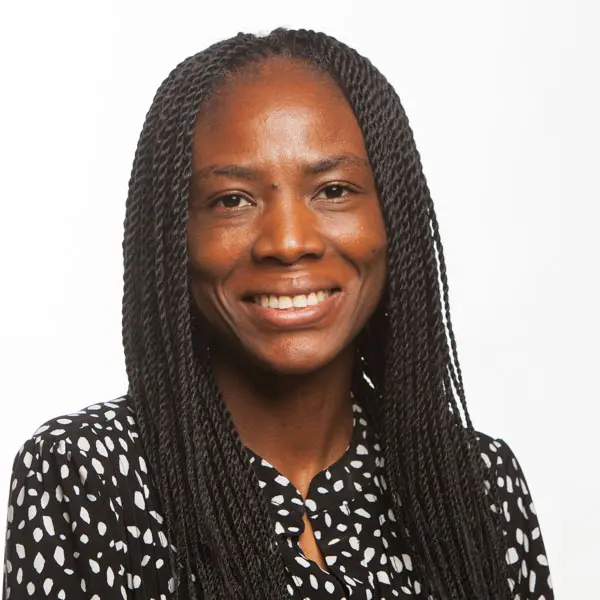
Assistant Professor of Computer Science

Professor of Computer Science & Engineering

Director of the Roth Center for Missions Computing; Instructor of Computer Science & Engineering

Computer Science & Engineering Program Assistant
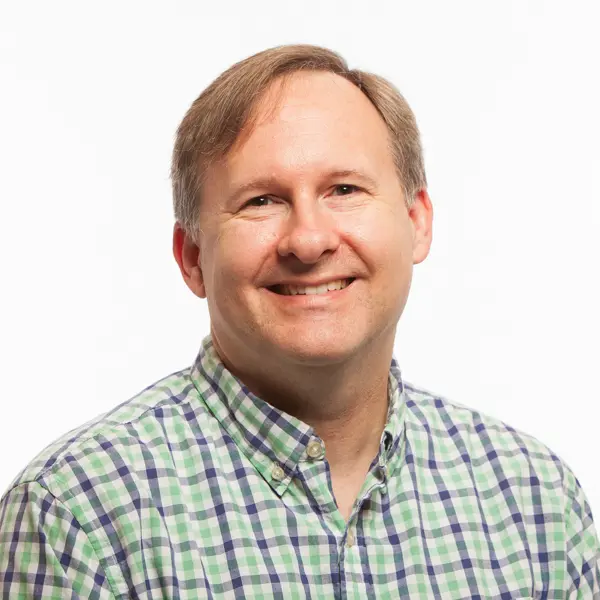
Computer Science & Engineering Resource Manager

Visiting Assistant Professor of Computer Science

Assistant Professor of Computer Science and Engineering
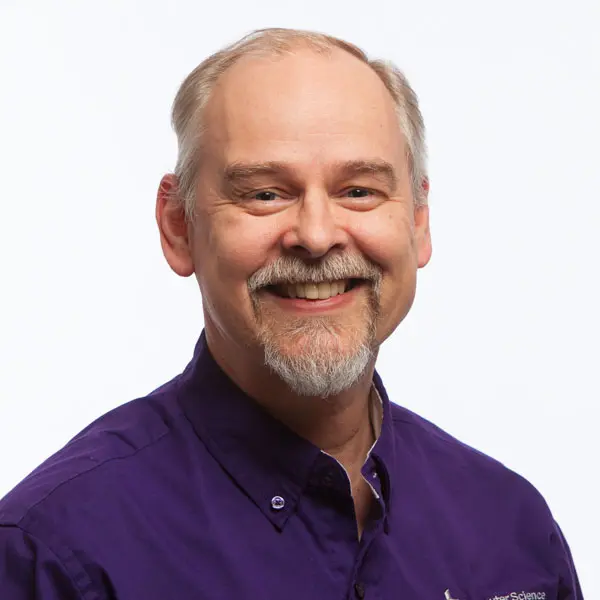
Associate Professor of Information Systems & Analytics

Assistant Resource Manager

Associate Professor of Computer Science & Engineering
Taylor Launches New Bachelor's Degree in AI and Machine Learning
Mission-Driven Computing in South Africa
Taylor Engineering Students Reach for the Stars
Data Analytics Team Explores Atmospheric Effects of Solar Eclipse
Taylor University Celebrates Roth Center for Missions Computing Ribbon-Cutting
Taylor University Mechanical Engineering Program Receives ABET Accreditation
Hands-On Learning: CSE Department Offers Summer Opportunities
Building the Future: Low-Cost Space Robotics for Large-Scale Assembly
Taylor Launches New Bachelor's Degree in AI and Machine Learning
Mission-Driven Computing in South Africa
Taylor Engineering Students Reach for the Stars
Data Analytics Team Explores Atmospheric Effects of Solar Eclipse
Taylor University Celebrates Roth Center for Missions Computing Ribbon-Cutting
Taylor University Mechanical Engineering Program Receives ABET Accreditation
Hands-On Learning: CSE Department Offers Summer Opportunities
Building the Future: Low-Cost Space Robotics for Large-Scale Assembly