-
-
- Financial Aid
- Financial Aid
- Scholarships
- Loans
- Grants
- Federal Work Study
- Additional Resources
-

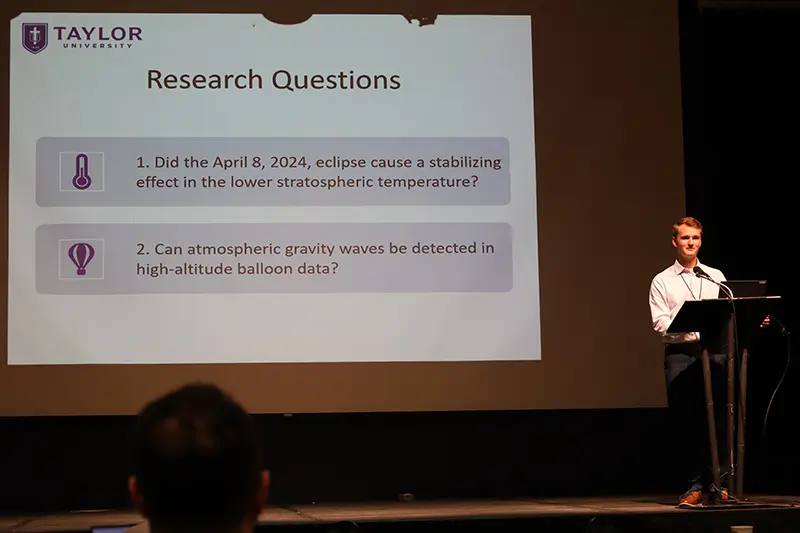
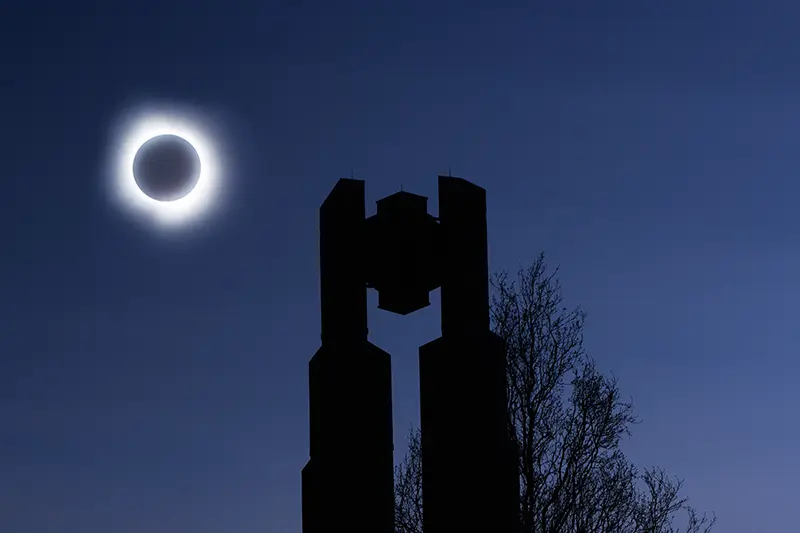
When the solar eclipse darkened the skies on April 8, 2024, most people were content to watch. A group of Taylor University students, however, were ready to measure what couldn’t be seen.
Led by Dr. Fola Ayano, Assistant Professor of Computer Science, the student research team launched into months of study centered on the eclipse’s impact on the atmosphere and gravity waves.
Last summer, senior Data Science major Ian Oatis represented the team at the 2025 Academic High Altitude Conference in Huntsville, Alabama. There, he presented their findings to professionals, professors, and students from across the country.
“It was a pretty selective process, so getting accepted and being able to present was an award itself,” Oatis said. “I was nervous going in, but once I got up there, I knew what I was presenting, and the audience was really receptive.”
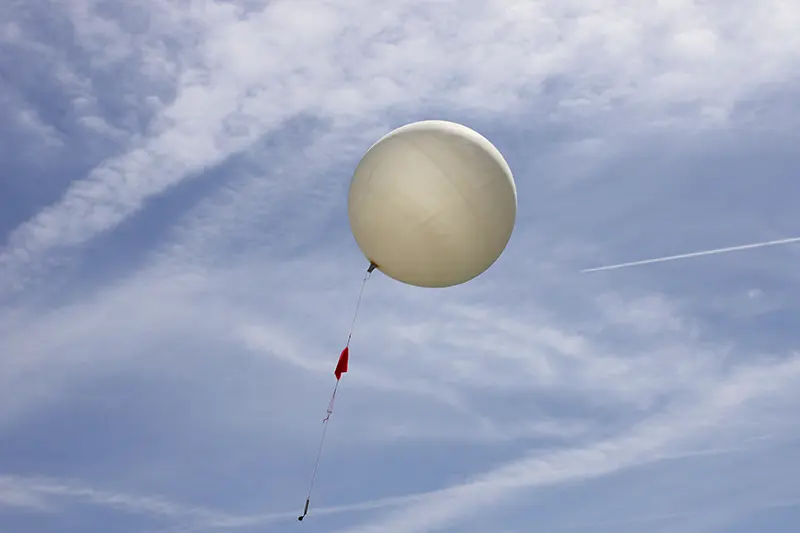
The research began with an ambitious partnership between Taylor University and NearSpace Launch. The Indiana-based aerospace company launched 14 high-altitude weather balloons during the eclipse to collect atmospheric data. Taylor University received access to the dataset and a grant from the Indiana Space Grant Consortium to fund student research analyzing the results.
After receiving the information, the project started during the summer of 2024 where a few students worked for eight weeks cleaning the dataset and preparing it for analysis. Oatis’s team took over during the 2025 spring semester to explore what insights the data might reveal. The team included Ian and three others: Ethan Elliot (Mathematics—Interdisciplinary), Charlie Mikels (Computer Science), and Ethan Sosnowski (Physics).
That semester, the four-student team set out to answer one central question: Did the solar eclipse cause atmospheric gravity waves or measurable disturbances in the air?
The results were promising.
“We found there’s a strong chance the eclipse could have caused these wave patterns, and we also noticed temperature stabilization in the atmosphere during the totality period,” Oatis said. “It was exciting to see that we’d actually found something worth sharing.”
For Dr. Ayano, mentoring students through research projects like this is one of the most rewarding parts of teaching.
“It’s a joy to see students take what they’ve learned in class and apply it to real-world problems,” Ayano said. “They begin to see how their coursework connects to what they’ll do in the future, and that relevance makes their learning come alive.”
Throughout the process, Ayano’s guidance helped the students stay on track while giving them freedom to explore. Weekly meetings provided structure and encouragement, and when Oatis prepared for his conference presentation over the summer, she continued to support him virtually.
“Dr. Ayano was great,” Oatis said. “She met with me over video calls to help me prepare because she really wanted to make sure I felt confident going in.”
Presenting at a national conference wasn’t just a professional milestone for the team; it was a glimpse into the broader world of scientific inquiry.
“The conference had about a hundred attendees from all over, and I was able to meet professors, students, and professionals working in atmospheric science” Oatis said. “It was exciting to see what other universities are researching.”
Opportunities like this are key to the growth of Taylor’s Data Science and Analytics program. Both Oatis and Dr. Ayano hope the project will inspire more students to pursue data-driven research, and see how their skills can be used for something impactful.
“Our Data Analytics team is interdisciplinary, so we’re open to collaborating with any department whether it’s Biology, Physics, Business, you name it.” Ayano said. “If there’s data to be explored, our students can help uncover meaningful insights.”