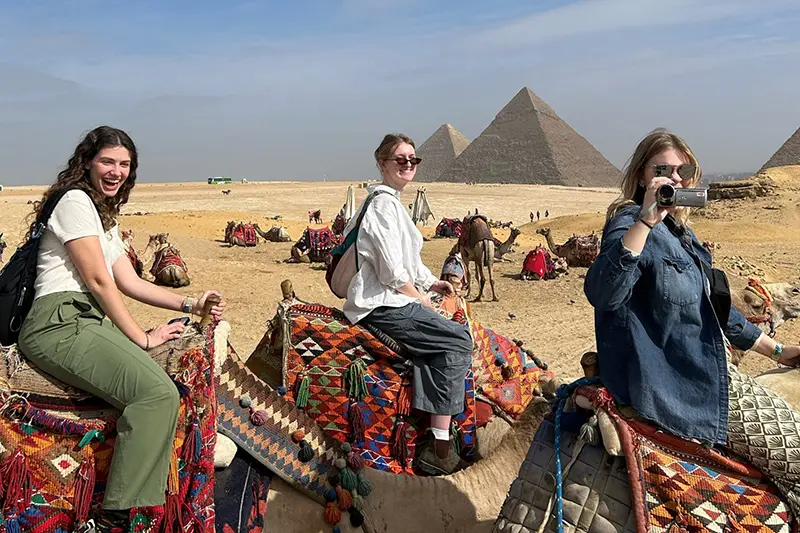
For decades, Taylor students have been boarding planes, crossing borders, and building relationships in more than 50 countries. Now, the programs that have made this possible are joining together under one roof—the Spencer Center for Global Engagement—set to occupy the first floor of the newly constructed Paul & Barbara Gentile Hall (PBG).
This move formally aligns Taylor World Outreach (TWO) and its Lighthouse service trips with the academic study abroad programs that the Spencer Center has been coordinating for more than 20 years. For students, the trips they love will look the same, but the alignment of academic, service-oriented, and missions-focused international experiences will provide a shared framework that connects every global opportunity.
"Taylor's vision for global engagement is rooted in the belief that every student should be prepared to serve, lead, and build meaningful relationships across cultures," said Dr. Scott Moeschberger, Dean of Global Engagement and Executive Director of Honors. "As we expand study abroad, service-learning opportunities, global hubs, and international partnerships, we are creating pathways for students to grow in cultural agility, servant-leadership, and faithful presence for a changing world."
A Legacy of Global Engagement
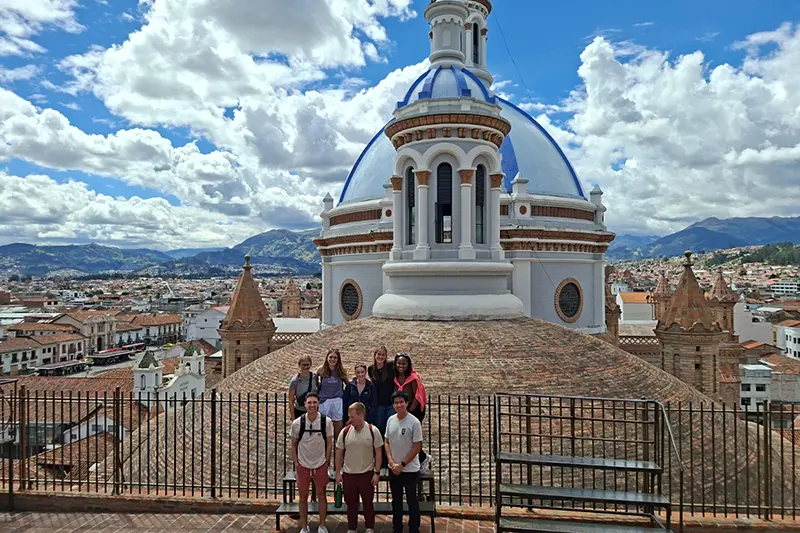
The Spencer Center for Global Engagement was established in January 2006 with a clear purpose: send Taylor to the world and bring the world to Taylor. In the years since, nearly 6,000 students have traveled to more than 50 countries through Center-facilitated programs. These range from academic J-Term trips and semester study abroad to international practicums and on-campus programs that welcome students from South Korea, Japan, Brazil, Ecuador, and beyond to Upland. That work has placed Taylor consistently among the Top 10 undergraduate institutions in the nation in the annual Open Doors report published by the Institute of International Education. Taylor is one of the only Council for Christian Colleges & Universities (CCCU) schools to hold this distinction.
Taylor World Outreach (TWO) and Lighthouse trips carry a complementary and storied heritage. For years, TWO has equipped students for evangelism and service through spring break mission trips, J-Term outreach, and local ministry. Lighthouse trips send students into communities in the United States and abroad to serve alongside partner organizations and live out the Gospel in tangible ways. These programs have shaped the faith and calling of generations of Taylor graduates, and that identity is not changing.
Bringing Programs Together
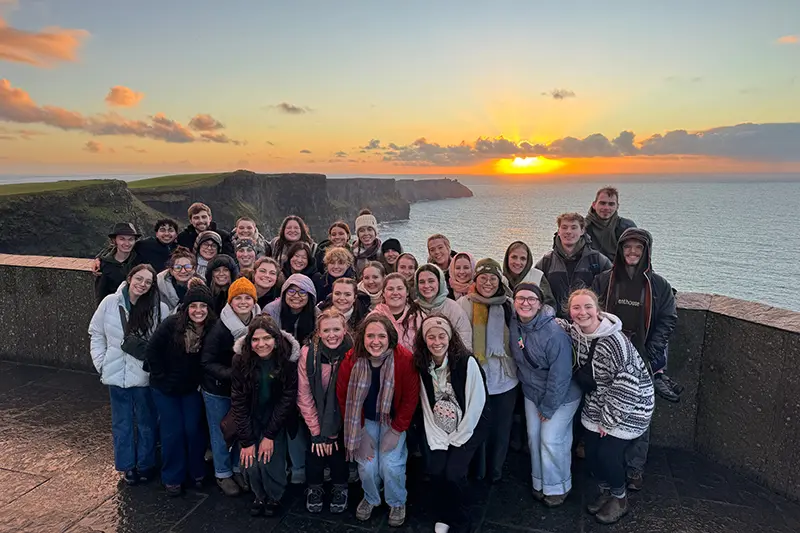
What is changing is coordination. Under the Spencer Center, a shared framework will prepare students across all three types of international experiences, whether they are studying New Testament backgrounds in Greece, serving with a local church through a Lighthouse trip in Central America, or spending a semester at a partner university in Kenya. Common standards for pre-departure training, risk management, duty of care, and student formation now apply across every program that takes students beyond Upland.
The goal is straightforward: every Taylor student who goes abroad, regardless of program, receives consistent preparation and support.
This alignment also sets the stage for Taylor to pursue an ambitious goal—that every student has a significant cross-cultural experience before graduation. Currently, about 25% of students study internationally each year. The Spencer Center aims to grow J-Term travel abroad participation significantly while expanding summer programming and developing global hubs, each an international partnership in a key city around the world. The first hub, likely in South Korea, is in development, building on a relationship Taylor already holds as the only Christian university in the country partnering with the King Sejong Institute, a cultural bridge-building program funded by the Korean government.
For Dr. Moeschberger, the work ahead is an extension of what Taylor has always known: that crossing cultures is not a supplement to Christian formation. It is part of it.